Does Wittgenstein see things from a ‘religious point of view’?

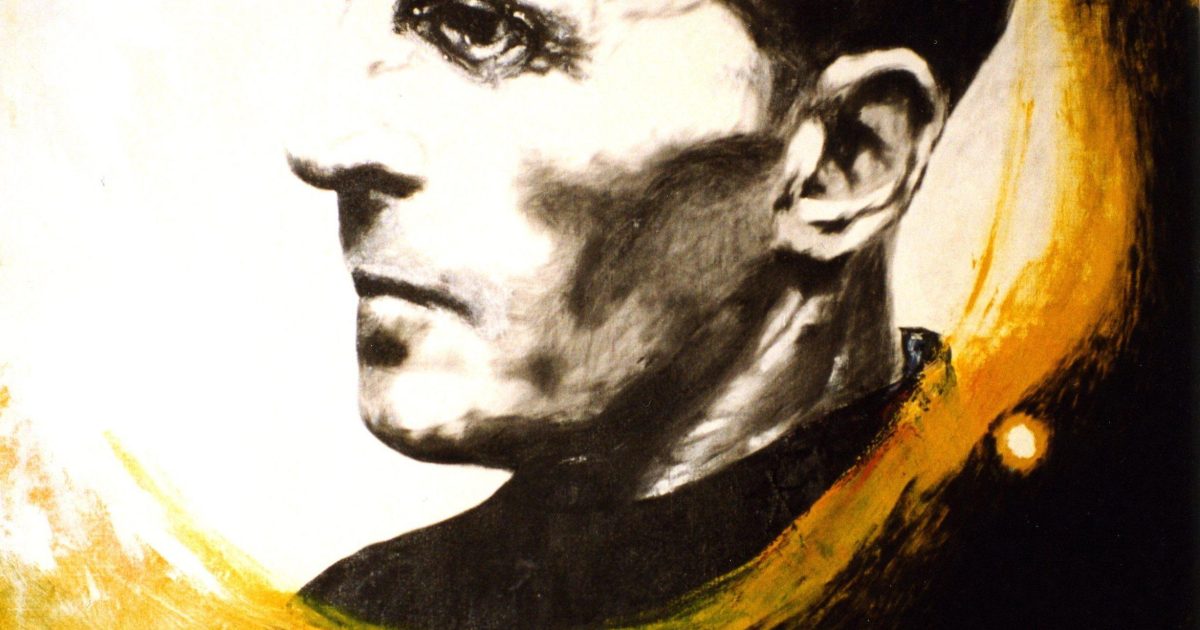
Christiaan Tonnis, CC BY-SA 2.0 via Wikimedia Commons
A few weeks ago, I was having lunch with a family friend. This friend is a retired economics teacher who spends much of his free time reading widely, including contemporary Western philosophy. He is therefore always interested in hearing about my humanities studies. However, when I told him that I was studying Ludwig Wittgenstein in my theology class, he seemed a bit confused: “What does Wittgenstein have to do with God?” Indeed, Wittgenstein is not widely known for making theological claims. Yet, as he himself reportedly remarked to a student, “I am not a religious man but I cannot help seeing every problem from a religious point of view” (Malcolm and Winch 1997, 1). Norman Malcolm, a former student of Wittgenstein, argues that Wittgenstein approached philosophical problems in a manner analogous to a religious attitude. In this essay, by defining what a “religious point of view” is (Part I), and presenting my understanding of Wittgenstein’s views (Part II), I will show that I agree with Malcolm’s claim that there is a similarity in form while maintaining that they differ in substance. By comparing Wittgenstein’s views with our definition of a religious point of view, I will therefore argue that Wittgenstein does not, in fact, see things from a religious point of view (Part III). Finally, I will explain that while a Wittgensteinian point of view is not itself religious, it can nonetheless be compatible with a religious one (Part IV).
I. What is a ‘religious point of view’?
In order to answer the question of whether Wittgenstein saw things from a “religious point of view”, one must first define both terms of the question. Let us begin by establishing a definition of a “religious point of view”.
For Richard Holloway, religion is properly human; according to his definition, religion’s most important belief is the existence of a reality beyond this world that is called God (Holloway [2016] 2025, 2). This is helpful, but we will need to refine this definition in order to examine Wittgenstein’s views: as demonstrated below, he does not claim to address the existence of this supernatural reality called God. Rather, we need to provide a definition not of religion per se, but of a religious point of view. Here, I will rely on Malcolm, who identifies four criteria of a “religious point of view”: (1) acceptance of human limits; (2) renunciation of total explanation; (3) intellectual humility; and (4) existential engagement rather than proof. In his book, Malcolm argues that Wittgenstein does not possess a religious point of view strictly speaking, but something analogous to one, based on these four characteristics. In this essay, I choose to accept these criteria, as I consider them relevant to the concept of religiosity. However, I will supplement them by adding the requirement of a religious conclusion—whether theistic or atheistic. This addition is necessary because attitudes such as humility, acceptance of limits, or the renunciation of explanation can also occur in non-religious contexts; without a conclusion that refers to a religious framework, these features alone are insufficient to constitute a genuinely religious point of view.
Before examining Wittgenstein’s view (Part II) and assessing whether it can be qualified as religious (Part III), a further clarification is required. A religious point of view must not be conflated with either philosophy of religion or theology. For D. Z. Phillips —and here I will use his definitions— philosophy of religion attempts to understand religious beliefs from the standpoint of believers, potentially making claims about their meaning or coherence while remaining externally situated. Theology, by contrast, speaks from within the tradition and is committed to its truth. Phillips emphasises that philosophy of religion examines religion “from the inside” only through imaginative understanding, whereas theology can “claim and examine since already from the inside” (Phillips 1993, 3).
II. Interpretation of Wittgenstein’s view of things
We do not possess direct access to Wittgenstein’s inner outlook; we have only his published writings, lecture notes, recollections by students and peers, and later interpretations. Even these sources must be treated cautiously, not least because we cannot be certain that Wittgenstein always said or wrote exactly what he thought. He was famously reticent about his own views, often presenting remarks without systematic exposition, and he explicitly denied being a religious man while simultaneously claiming, as noted above, that he could not help seeing problems “from a religious point of view.” My attempt to answer the question therefore relies on an interpretation of his philosophical method and sensibility rather than on psychological speculation. As Norman Malcolm observes, this remark about a religious view is puzzling precisely because Wittgenstein did not explicitly introduce religious ideas into his philosophical investigations, leaving readers to search for analogies rather than doctrines. Accordingly, the task is not to reconstruct what Wittgenstein privately believed, but to determine whether the perspective manifested in his work resembles what we would ordinarily call a religious one (Part III).
Wittgenstein is, first of all, a logician. His early work, the Tractatus Logico-Philosophicus, presents a rigorously logical account of language and reality, distinguishing between the sense (what can be said) and the nonsense (what can be shown). But in the Tractatus, and even more in his later work, Wittgenstein’s view is not purely logical or scientific: he is interested in the limits of meaning and language (Heaton and Groves 1994, 40). Indeed, in his later work, Wittgenstein emphasises that meaning does not reside in abstract ideas behind words but in their use. Language is conventional; the world is not. How, then, are the two connected? Through a “social project”. Through interactions. I cannot be certain that my representation of a “red rose” is identical to that of my childhood friend, yet through interactions with our environment, we reach a convention that there is something that we both call “red rose”. Therefore, it becomes admittedthat this object is a “red rose” for us and all the participants in that environment (in which we grew up). For Wittgenstein, we share a language-game because we share a form of life.
Wittgenstein also insists that many things cannot be expressed independently of their use within such games. Philosophy, as Mark Addis notes, is not concerned with completeness or exactness but with resolving confusions and clarifying limits (Arrington and Addis 2001, 94). If, on a walk, my four-year-old nephew asks me what a cloud is, I will simply point to a cloud in the sky; I will not tell him that a cloud is a mass of tiny water droplets or ice crystals floating in the atmosphere. For him, that will be enough to establish not only that there is a cloud, but also that there are clouds in general, and this new fact will become part of his language-game. If he asks me what a butterfly is, even if there are no butterflies nearby, I could describe its shape and physical characteristics. But if my nephew were to ask me what language is, that would be far more difficult to explain. I might not be able to give any clear answer that would guarantee he understood what I meant, or that the concept of language would acquire the same meaning for him as it has for me. However, in fact, I am almost certain that he would never ask such a question. Nor did I when I was his age, and actually I cannot recall ever hearing a child ask what language is. This is because we simply speak to children and they learn; we do not first explain what language itself is. If my nephew nevertheless did ask what language is and why we use it to communicate, I would ultimately have to say, “This is simply what we do.” Not out of unwillingness, but because I would have no deeper explanation to offer: language does not possess a simple essence that can be described independently of its use.
What, then, is the place of God or religion in Wittgenstein’s outlook? It is tempting to appeal to biographical considerations. Wittgenstein was an intensely sensitive individual who experienced profound personal turmoil, including the suicides of several of his brothers and the trauma of front-line service during the First World War. Such experiences surely contributed to the existential seriousness of his philosophy. However, biographical speculation alone cannot determine the philosophical content of his views.
But God is also present in Wittgenstein’s work because in order to go further with any attempt to define language, the only possibility is to admit that there is something else—and that thing can be God. But let’s come back to that a bit later (Part IV).
What is crucial is that Wittgenstein doesn’t go that far: he deliberately refrains from advancing metaphysical claims about what lies beyond language. He seeks to work only with what can be meaningfully said, pushing this analysis as far as possible to find its limits. As Don Cupitt puts it, for Wittgenstein “all we can see clearly is the way our language works in the games we play. So we can see how belief in God works and how it ought to shape our lives. But then we must stop at that” (Sea of Faith 1984).
III. Assessing Wittgenstein’s view against our definition of a religious point of view
Let us now examine whether this point of view matches our definition of a religious point of view.
To begin with, the four criteria. The first is the acceptance of human limits. Wittgenstein’s point of view does indeed acknowledge such limits: by nature, our minds cannot conceive the inconceivable. We can dig deeper and deeper into our attempts at explanation, but eventually we reach bedrock: “explanations, reasons, justifications, come to an end.” This corresponds precisely to our second criterion, the renunciation of total explanation. It also reflects a form of intellectual humility: we are not capable of explaining or conceiving everything, in much the same way that “God stands in no need of justifying or of explaining His ways to mankind” (Malcolm and Winch 1997, 3). Finally, Wittgenstein points toward something closer to existential commitment than to proof: we accept fundamental human practices without grounding them in metaphysics. Similarly, religious belief often involves accepting God’s will rather than proving it. We therefore have the four criteria, but for the match to be complete we must examine the second requirement of our definition: the presence of a religious conclusion.
And here Wittgenstein is very clear: he does not wish to move in that direction. As Hyman notes, God is mentioned only four times in the Tractatus (Arrington and Addis 2001, 3). In his later work, references to God function primarily as occasions for philosophical clarification rather than as doctrinal assertions. Indeed, for Wittgenstein and many of his interpreters, treating God as an object among others is itself nonsensical. His view is certainly philosophical, since it seeks to describe our world — and we have seen that this is the role of philosophy in the Wittgensteinian tradition — but it does not really fall within the definition of “religious philosophy,” and even less within that of theology. Indeed, Wittgenstein does not attempt to assess the reality or truth of religion. In his view, such questions are simply irrelevant. If one believes in an eternal and transcendent God, such a being cannot be understood by us. If I believe in an eternal God that I cannot conceive: that is just the belief in my conception of the inconceivable, and by nature, not the inconceivable itself. Such a God cannot be analysed within Wittgenstein’s philosophical framework, because it cannot, by definition, be described.
If something cannot be described — that is, if it cannot be said — then, at least in the Tractatus, Wittgenstein says that it must be passed over in silence. That means we cannot add anything more philosophically. At this point, a religious response may emerge: one may choose to believe in God or not. Such belief is neither rational nor irrational because it lies outside the domain of philosophical justification; therefore, the categories of rationality and irrationality do not apply to it. Wittgenstein’s later philosophy and additions regarding language do not attempt to resolve this issue. He does not argue for the existence of God or for His non-existence. Yet, according to our earlier definition, adopting a religious point of view would require precisely such a conclusion. Therefore, my claim is that Wittgenstein does not see things from a “religious point of view.”
IV. Compatibility between Wittgenstein’s view and religious belief
Wittgenstein’s claims and work, as we have seen, suggest that the role of philosophy is to describe the world and to untangle the semantic confusions that arise from our condition as finite human beings. His claim that all arguments — that is, sets of propositions consisting of premises and a conclusion — ultimately reduce to tautologies is difficult both to understand and to accept, not least because it is expressed within the very language-games he seeks to describe. However, this difficulty does not alter the essential point. Whether such a demonstration is valid or invalid, this essential point remains the same: philosophy, in Wittgenstein’s view, reaches limits that cannot be surpassed. As finite beings, we cannot conceive what lies beyond the bounds of our possible thought. We cannot think beyond what we are capable of thinking.
Two consequences follow from this. First, one might object that Wittgenstein’s refusal to speak of God already reflects a quasi-religious attitude toward the ineffable. In the present context, this is wrong: I am prepared to concede that Wittgenstein’s point of view might be described as religious under a different definition of a “religious point of view” or under a different interpretation of Wittgenstein’s own views. However, such definitions are not the ones I adopted in this essay. Second, a religious outlook is perfectly compatible with Wittgenstein’s philosophy, since the two do not belong to the same domain. They may even be complementary, provided we recognise that religious belief itself is shaped by our language-games — by what we are able to conceive and express. For instance, if I choose to believe in God, I may adopt a religious perspective and answer my nephew asking why we use language to communicate by saying: “Because this is God’s will; He made us as we are.” I would then struggle to explain who God is or how this creation occurred, yet I could still speak meaningfully about my beliefs, aware that I cannot fully comprehend and express what I believe in. The child, in turn, would develop his own religious beliefs — what D. Z. Phillips calls a “primitive theology.”
Thus, the two perspectives are not contradictory and may indeed complement one another. What would be mistaken, however, is to treat Wittgenstein’s philosophy itself as a religious doctrine or to invoke it as a justification for religion. As Phillips emphasises, “the role of philosophy is not to justify, but to understand” (Phillips 1993, 5). However, although I agree with Phillips to some extent, his reading of Wittgenstein appears to push this insight too far, transforming a methodological point about philosophical limits into a stronger claim about the status of religious belief. In this sense, he risks using Wittgenstein less as a guide to clarification than as a means of placing religion beyond forms of reflection that Wittgenstein himself did not explicitly rule out; yet pursuing this line of criticism would take us beyond the scope of the present discussion and would require an essay of its own.
I maintain that describing Wittgenstein’s outlook as a genuinely religious point of view is misleading. His philosophy undeniably shares several features with what we defined as a religious attitude — acceptance of human limits, renunciation of total explanation, intellectual humility, and an emphasis on practice rather than proof. These parallels help explain why Malcolm could see a resemblance and why Wittgenstein himself could claim that he could not help seeing problems “from a religious point of view.” Yet resemblance is not identity. What is lacking is precisely what our definition required: a religious conclusion. Wittgenstein does not affirm a transcendent reality, nor does he deny one; instead, he stops at the limits of what can be meaningfully said.
His philosophy therefore does not offer a religious vision of the world but a clarification of the conditions under which any vision — religious or otherwise — can be expressed. A religious outlook may be compatible with this framework, and may even find support in its emphasis on humility and limits, but it is not generated by it. To treat Wittgenstein’s perspective itself as religious would thus be to mistake an analogy for a doctrine. In this sense, his remark that he saw problems “from a religious point of view” quoted in the introduction should be understood not as a declaration of faith, but as an acknowledgment of a certain seriousness, restraint, and awareness of limits that resembles — without constituting — a religious stance.
Bibliography
Arrington, Robert L., and Mark Addis. 2001. Wittgenstein and Philosophy of Religion. Routledge.
Cupitt, Don, dir. 1984. Sea of Faith. Episode 6, ‘The New World – Friedrich Nietzsche and the Death of God. Ludwig Wittgenstein’s Austerity and Rigor towards Language, His Suspicion of Built-up Religious Theories.’ Aired, on BBC.
Heaton, John M., and Judy Groves, eds. 1994. Wittgenstein for Beginners. For Beginners. Icon Books.
Holloway, Richard. (2016) 2025. A Little History of Religion. Yale University Press.
Malcolm, Norman, and Peter Winch. 1997. Wittgenstein: A Religious Point of View? Taylor and Francis.
Phillips, Dewi Zephaniah. (1993) 1993. Wittgenstein and Religion. St. Martin’s press. Reprint, Macmillan Publishers.
Saint-Exupéry, Antoine de, Michel Autrand, Michel Quesnel, Paule Bounin, and Françoise Gerbod. 1999. Œuvres complètes. Nouv. éd. Bibliothèque de la Pléiade. Gallimard.
Wittgenstein, Ludwig, and Frédéric Joly. 2025. De la certitude suivi de Conférence sur l’éthique. Petite biblio Payot 1335. Éditions Payot & Rivages.